
Reviewed · DUBROVNIK WALKING TOURS
Dubrovnik Old Town: Small-Group Walking Tour With A Local
Dubrovnik’s Old Town is compact, but its history is not. This small-group walk links its gates, churches, palaces, harbor and main street, while a local guide helps you read the stories behind the stone. The group is capped at eight people, so you can hear the guide and ask questions without following a flag through a crowd.
I like two things in particular: the route covers the main sights while also ducking into less obvious corners, and guides such as Marko make the past stick with quizzes and friendly competition. You’ll hear about the city’s maritime trade, its old republic and even the nose on a playwright’s statue.
The main consideration is pace and scope. The tour moves through many stops in roughly 90 minutes to two hours, so it gives you an excellent orientation, not a long visit inside each monument. Entrance fees are not included, and the guide does not take you into churches or museums that charge admission.
What to know before you book
- Eight people maximum: A small group makes it easier to ask questions and keep up with the guide.
- A local perspective: Guides such as Marko have grown up in Dubrovnik’s Old Town and bring personal experience to the city’s past and present.
- A route from Ploče to Pile: Start by the eastern gate and finish near the large Onofrio Fountain at the western end.
- Stories, not just landmarks: Expect legends, political history, maritime trade, local customs and small details in the stonework.
- About 90 minutes to two hours: The pace is described as easy, though the route includes many stops and walking between them.
- Entry fees are extra: You’ll see the exteriors and hear about sites such as the Rector’s Palace and Franciscan monastery, but paid interiors are not part of the tour.
A compact walk through a complicated city
The tour begins at Harbour Viewpoint, beside Ploče Gate, the Old Town’s eastern entrance. From there, the guide introduces Dubrovnik’s beginnings and explains why the city mattered. That opening context is useful: a gate is more than a handsome stone entrance once you know it marked access to a small republic with its own political and trading life.
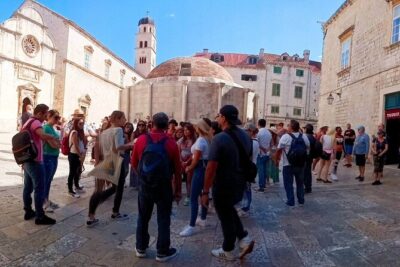
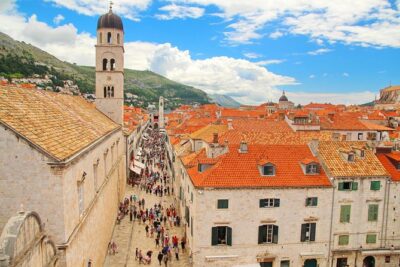
The walk is designed to give you a broad map of the Old Town. You’ll cross central squares, pass churches and palaces, follow the line of Stradun, and finish near Pile Gate. This is a good first-day activity if you want to know what you’re looking at before returning to a particular sight on your own.
The route is not a string of long indoor visits. Most stops last only a few minutes, with a longer pause at the Rector’s Palace and Dubrovnik Synagogue. That format suits visitors who want a clear introduction and a lively walk. If you prefer to study exhibits or architecture at length, plan a separate visit to the places that interest you.
More Old Town tours in Dubrovnik:
- Dubrovnik: Old Town Walking Tour
★ 4.8 · 5,174 reviews - Dubrovnik Discovery Old Town Walking Tour
★ 5.0 · 4,458 reviews - Dubrovnik Old Town History Walking Tour
★ 5.0 · 1,684 reviews
From Ploče Gate to the old harbor
At Ploče Gate, the guide sets out the city’s origins and historical importance. The tour then takes in the Dominican Monastery, described as the oldest still-active monastery in Dubrovnik. You’ll hear about it from outside, rather than going in, so treat this as an introduction rather than a monastery visit.
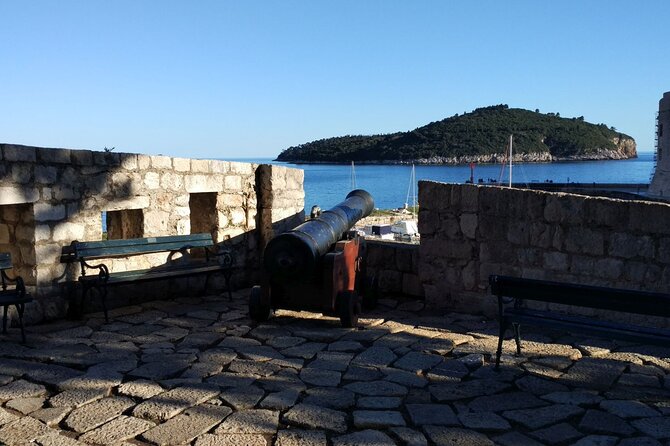
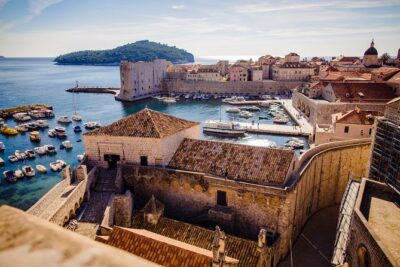
Next comes the City Harbor, once a center of trade for the Dubrovnik Republic. The guide talks about maritime history and the wooden galleons built here. This stop helps connect the city’s stone streets to its life on the sea, a useful counterpoint to the churches and civic buildings ahead.
A few minutes at each location may sound brief, but the guide’s job is to give you a handle on what you’re seeing, not to replace a full museum visit. You can use the walk to decide which places merit more of your time later.
Churches, a cathedral and local characters
The Cathedral of the Assumption of the Virgin Mary gives the guide a chance to discuss its baroque architecture and layered past. The intriguing question of whether there was one cathedral or three points to the long history behind the building. The tour does not include entry, so the focus is on the exterior and the stories.
At the Church of St. Ignatius of Loyola, you’ll hear when and why the Jesuits came to Dubrovnik, along with a story about a famous Jesuit from the city whose name is also attached to a crater on the Moon. The detail gives the stop an unexpected angle beyond the church’s religious role.
The nearby market square brings you to the monument of poet Ivan Gundulić. Here, the guide introduces one of the best-known poets of the old republic and the square itself. At the statue of playwright Marin Držić, the story shifts from literature to a local habit: people touch his golden nose. These small customs are precisely the sort of detail that can turn a quick pass-by into something you remember.
The Church of St. Blaise adds another layer of local identity. Saint Blaise is Dubrovnik’s patron saint, and the guide explains both the legend and the historical story associated with him. Keep an eye out for his statues around town after the tour; the guide may have you looking for them as part of a trivia-style game.
Political power at the Rector’s Palace
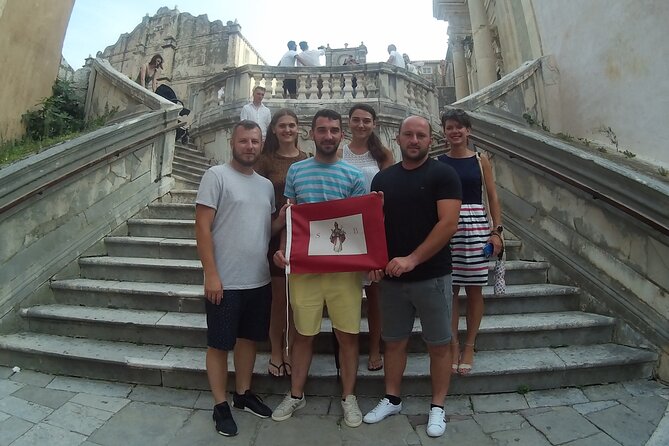
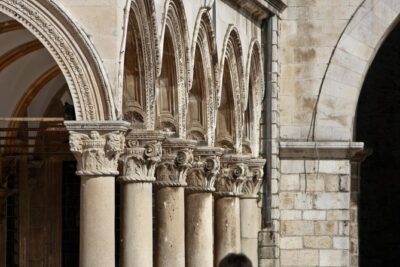
The Rector’s Palace is one of the route’s longer stops, with about ten minutes devoted to its role as the supreme political institution of the old Dubrovnik Republic. Here, the guide talks about aristocracy, political judgment and some of the less expected details of civic life.
That context is especially useful because the building is not simply an impressive façade. It represents how the republic governed itself, and the stories help you connect the architecture to people and decisions. The tour does not include the admission fee or an interior visit, so leave time to return if you want a closer look inside.
Nearby, Sponza Palace brings a different side of public life into view. Once the republic’s customs house, it now houses the historical archives. The guide explains its former purpose and shares Latin proverbs linked to the building. It is a compact stop, but a good reminder that trade, records and administration all helped shape the city.
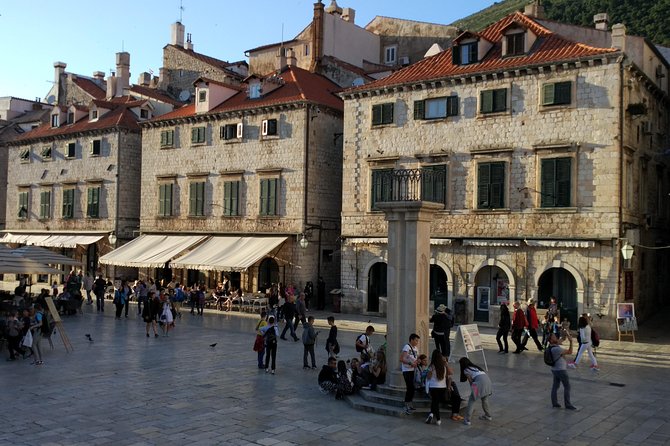
The Bell Tower, Church of Saint Blaise and Orlando Column sit among the central landmarks. At Orlando’s column, you’ll hear how the brave knight became a symbol of the old republic. These stops are brief, but together they make the main square easier to read: religion, civic identity and public life meet within a short stretch of the Old Town.
More walking tours in Dubrovnik:
- Dubrovnik: Game of Thrones Walking Tour
★ 5.0 · 1,732 reviews - Dubrovnik: City Walls Early Morning or Sunset Walking Tour
★ 4.8 · 1,523 reviews - Dubrovnik: Ancient City Walls & Wars Walking Tour
★ 5.0 · 1,270 reviews - Dubrovnik: Game of Thrones Walking Tour
★ 4.9 · 981 reviews
The synagogue, Stradun and smaller details
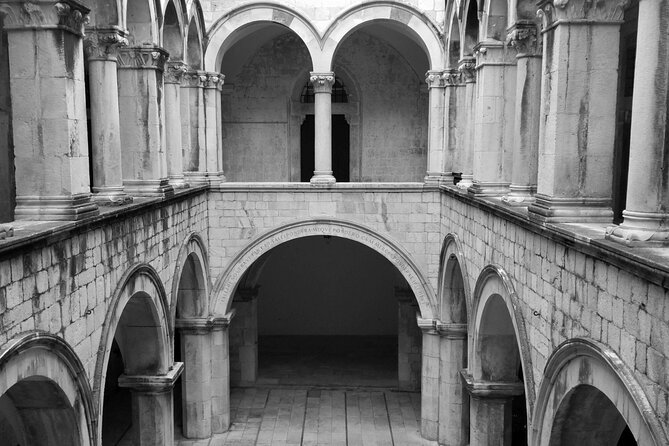
The Dubrovnik Synagogue receives one of the tour’s longer pauses, about ten minutes. The guide covers the Jewish community from its early history through hardship and into the present. That broader account gives the walk a perspective beyond the city’s best-known churches and political buildings.
From there, you’ll walk along Stradun, the polished main street of the Old Town. It is the obvious route through the center, but the guide’s commentary can help you notice its place in the larger city rather than treating it as just a handsome pedestrian street.
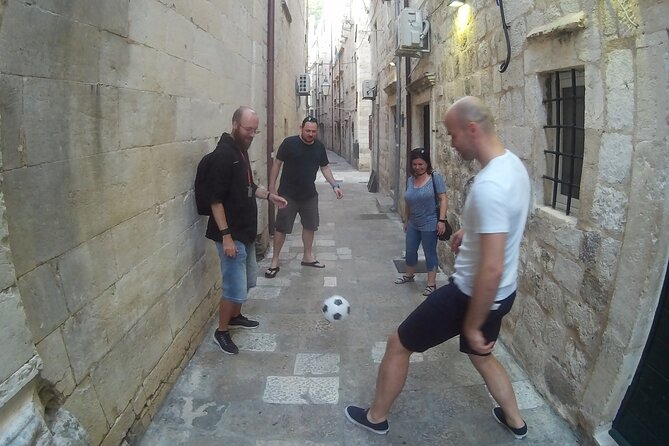
The tour also pauses at the Church of St. Roch, tucked away from the main street. The guide points out old graffiti on its side wall and tells how children once played football in front of the church. It’s a modest stop, but one of the walk’s more human details: everyday play leaves traces alongside the grand monuments.
At Onofrio’s Large Fountain, you’ll learn about its 15th-century construction and role as the terminus of the old aqueduct. This is a practical point in the route as well as a historical one. The fountain is near the western end of the walk and makes an easy landmark for orienting yourself afterward.
The final stretch leads toward Pile Gate, the Old Town’s western entrance. Before the tour ends, the guide explains the end of the Dubrovnik Republic. Starting with the city’s beginnings at Ploče and finishing with the republic’s end gives the walk a clear arc, rather than leaving you with a list of disconnected sights.
Why the guide can make the difference

The most frequently praised feature of this tour is the guide’s ability to make history engaging without turning the walk into a lecture. Marko is particularly associated with trivia questions and a light scoring game. It gives you a reason to look closely, whether you’re spotting Saint Blaise figures or recalling a detail from an earlier stop.
That approach works for adults and can help keep teenagers involved, too. The games are a small touch, not the point of the tour, but they encourage you to pay attention to the buildings around you. Guides including Lucy and Lucia are also named, and their style may differ, but the tour’s local focus remains central.
Several guides are described as being raised in the Old Town. That matters because the route covers current customs as well as older history. You may hear about daily life alongside republic-era politics, and you can ask questions as they come up. The small cap makes that exchange more practical than it would be in a large group.
The pace is described as easy, and guides have adjusted it for people with minor mobility concerns. That is a reassuring sign, but it is not a guarantee of a particular accommodation. If you have specific needs, it is wise to contact the operator before booking.
What $34.59 buys you
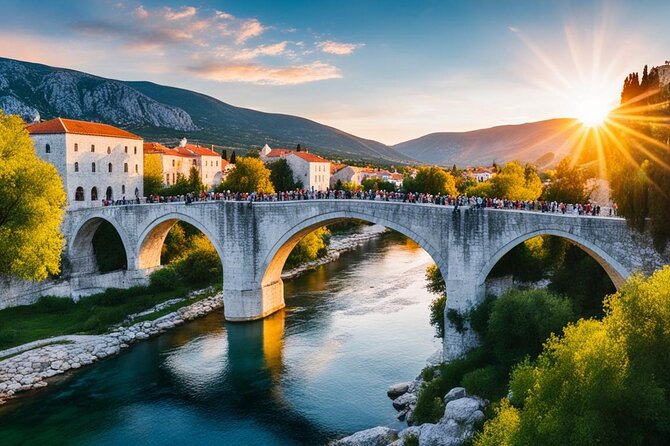
At $34.59 per person, this is a reasonably priced way to get an organized introduction to Dubrovnik’s Old Town. The value comes less from the number of stops than from having a local guide connect them: a harbor becomes a trading center, a palace becomes a seat of government, and a familiar statue gains a story.
The group limit of eight also matters at this price. You are paying for a guided walk with room for questions, not an entry ticket to a series of monuments. If you plan to go inside the Rector’s Palace, monastery, cathedral or synagogue, budget separately for any admission charges. The tour specifically excludes entry to churches and museums that charge fees.
For visitors on a short stay, the route helps you sort out what you want to revisit. For anyone already familiar with Dubrovnik, the stories about local traditions and tucked-away details may still add value, though the broad overview will be most useful on a first visit.
Timing, meeting point and a few practical notes
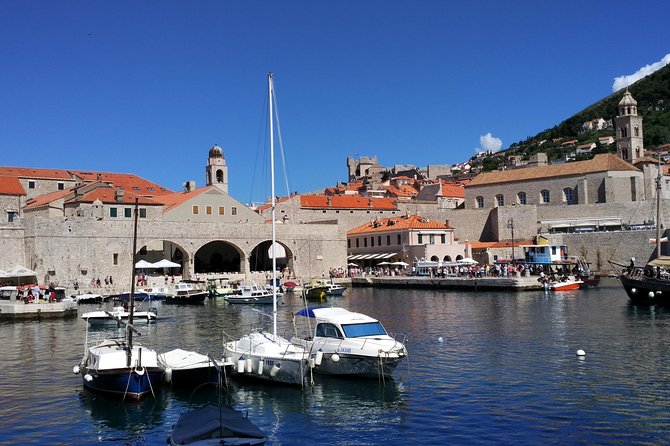
The advertised duration is about 90 minutes to two hours. The route’s scheduled stop times add up to a compact tour, but walking between sites and questions can affect the total. Leave some breathing room afterward rather than scheduling another activity right on the expected finish.
Meet at Harbour Viewpoint on Ul. Svetog Dominika, by Ploče Gate. The walk ends near Pile Gate, at Onofrio’s Large Fountain. This east-to-west route means you finish at the opposite end of the Old Town from where you began, so note the final meeting point if you have plans afterward.
The ticket is mobile, and the tour is offered in English. The group can include up to eight people, and the activity is described as suitable for most participants. It requires good weather and a minimum number of participants. Free cancellation is available up to 24 hours before the start time; cancellations inside that window are not refunded.
Should you book this Dubrovnik walk?
I’d book this tour if you want a personal, well-paced orientation before exploring the Old Town on your own. Its strongest assets are the eight-person cap, guides such as Marko who make the history interactive, and a route that ranges from the harbor and Stradun to the synagogue and small traces of everyday life.
Skip it if your main goal is to spend substantial time inside monuments during a guided visit. This walk explains the sights from the outside and does not include admission. For a first look at Dubrovnik, though, the route offers a useful framework, lively local stories and enough specific detail to make your later wandering more rewarding.
FAQ
How long is the walking tour?
The tour lasts approximately 90 minutes to two hours.
How many people can join the group?
The maximum group size is eight people.
Where does the tour start?
It starts at Harbour Viewpoint on Ul. Svetog Dominika, beside Ploče Gate.
Where does the tour end?
It ends near Pile Gate, by Onofrio’s Large Fountain.
Is admission to churches and museums included?
No. The tour does not enter churches or museums that require an admission fee.
What language is the tour offered in?
The tour is offered in English.
What is included in the price?
A professional licensed tour guide is included. Entrance fees are not included.
What happens if bad weather cancels the tour?
If poor weather causes the tour to be canceled, you’ll be offered another date or a full refund.
Recently added in Dubrovnik
- TOP OFFER: Dubrovnik to Split via Ston, Počitelj, Mostar, Kravica★ 5.0 · 15 reviews
- Private tours to Elaphite Islands by UFO BOAT★ 5.0 · 6 reviews
- Peljesac Wine & Ston Oysters PRIVATE HALF DAY SHORE TOUR★ 5.0 · 10 reviews
- Dubrovnik Old City Walls Private Tour★ 5.0 · 12 reviews
- Ston Tour: City Walls, Saltworks, Wine & Adriatic Seafood★ 5.0 · 3 reviews
- Pelješac Wine, Beach and Lunch – Relaxing Tour from Dubrovnik★ 5.0 · 15 reviews
- Private Full Day Peljesac Wine Tasting Tour from Dubrovnik★ 5.0 · 35 reviews
- Visit magical Mljet Island with private speedboat★ 5.0 · 7 reviews
Dubrovnik Walking Tours, compared.


City Walls Early Morning or Sunset Walking Tour
Read our review →
Dubrovnik Cable Car Ride, Old Town Walking Tour plus City Walls
Read our review →
Dubrovnik Food and Drink Walking Tour with a Local Guide
Read our review →Browse the lists this tour appears in