

Reviewed · DUBROVNIK CITY WALLS TOURS
Ston private walking tour with the walls and saltworks visit
Ston’s walls and its working saltworks tell two sides of the same story: this small Dalmatian town was fortified to protect a valuable salt trade. On this two-hour guided walk, you visit the old town, climb to a central fortress, see salt being made by traditional methods and finish on the medieval walls.
I like the combination of a hands-on saltworks visit and a wall climb with broad views over the salt pans and sea. The main consideration is the physical effort: the route involves climbing, and the tour is not suitable for wheelchair users or people with mobility impairments.
Key points to know before you book
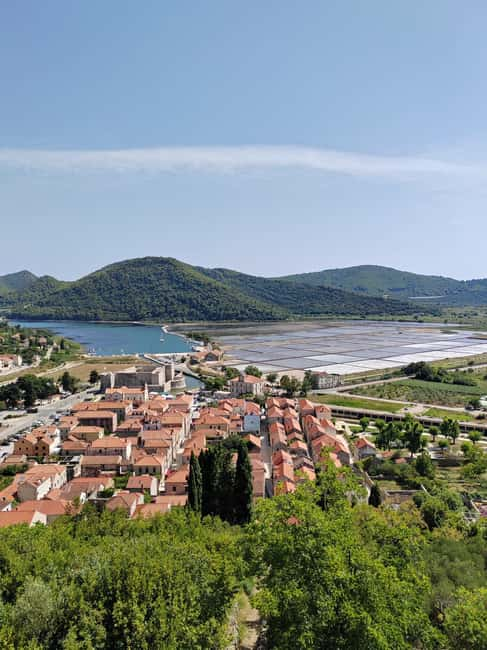
- The tour links salt and stone: Ston’s fortifications and saltworks make more sense when you see them in the same walk.
- You enter an active saltworks: Learn about natural salt production and feel the crystals on your fingers.
- The walls are a major part of the visit: Climb the 14th-century fortifications and explore old medieval fortresses.
- The English-speaking tour lasts two hours: A local licensed guide leads the walk through town, the saltworks and the walls.
- Admission is included: Your price covers entry to both the walls and the saltworks, as well as the guide.
- Expect a climb and sun exposure: Bring comfortable shoes, a hat and sunscreen.
Why Ston’s salt and walls belong together
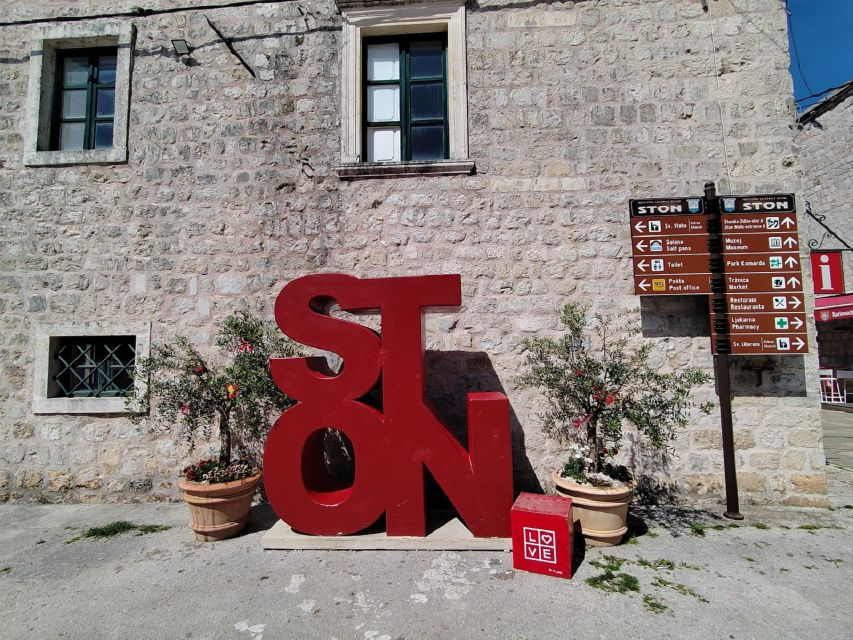
Ston is a compact town with an unusually large story. Its saltworks have been producing salt for centuries, and the town’s fortifications helped defend a resource valuable enough to shape its fortunes. Seeing both in one visit gives you more context than treating the walls as a stand-alone photo stop.
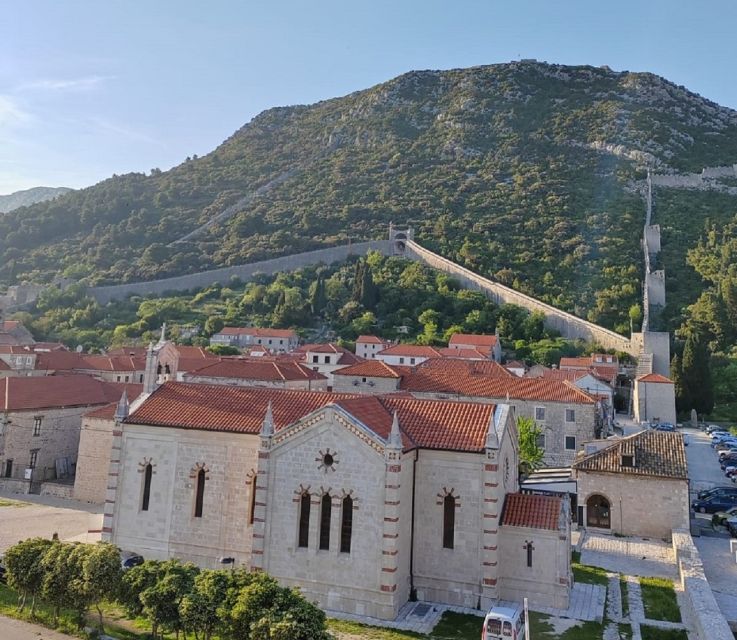
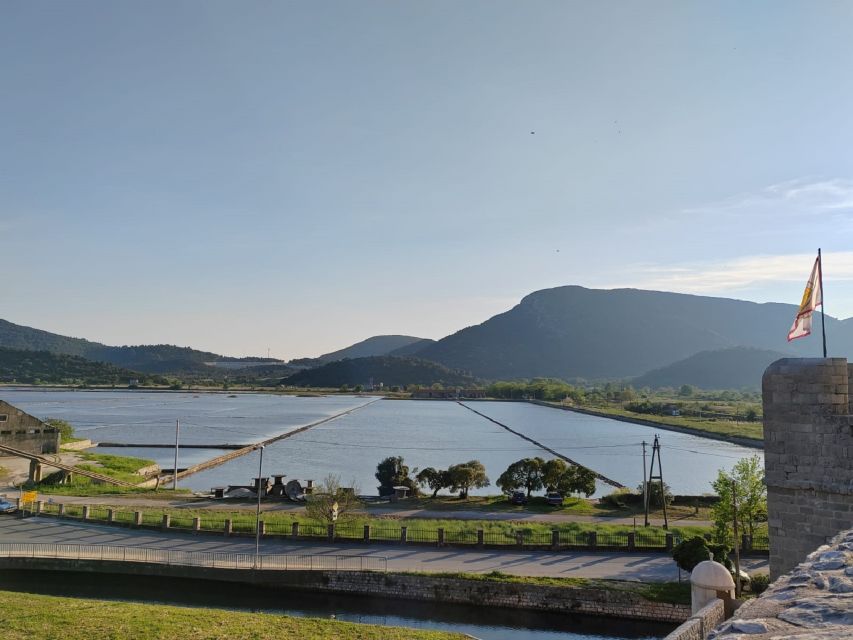
The fortifications are described as the second largest in the world, and they date to the 14th century. You will also see the central fortress, which overlooks the sea and salt pans. From up high, the connection between the town, the defensive works and the salt flats becomes easier to grasp.
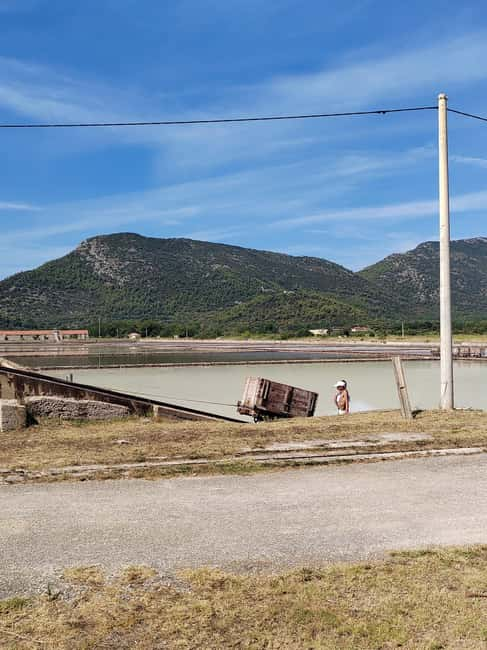
The saltworks offer a different kind of history. Production is still carried out using methods associated with the old Roman era, and the salt is made naturally. You are not simply hearing about a long tradition from behind a display case: the visit includes a chance to feel salt crystals on your fingers.
That mix is the tour’s strongest idea. The walk gives you a close look at the town’s built history, then brings you to a working place where an old local craft is still part of the present.
More Ston and oyster trips in Dubrovnik:
- Explore Mostar, Ston and Kravice Waterfalls ( Small Group )
★ 4.5 · 166 reviews - Wine Lover’s Tour of Peljesac Peninsula
★ 5.0 · 150 reviews - Peljesac Peninsula & Korcula Island Day-Trip from Dubrovnik
★ 4.3 · 135 reviews
Starting with Ston’s old town
Your guide begins with the main points of the old town. The exact streets and stops are not specified, so expect an introductory walk rather than a promise of particular buildings or named monuments. This first part helps you get your bearings before the route rises toward the fortress and walls.
A local guide can make a short visit more legible. Instead of seeing a cluster of old streets and stone structures as a collection of picturesque details, you can ask questions and connect what you see to Ston’s role in the salt trade and its need for defence. The guide is licensed, and the tour is conducted in English.
Mia is the guide named in several accounts of the tour. The comments about her point to the qualities that matter on a short guided walk: clear explanations, a friendly manner, and a willingness to answer questions. One family of six adults also appreciated that she adjusted the start time on a very hot day and took their group’s needs into account. That flexibility may be useful, though you should not assume a particular start time can always be changed.
The old town section is also a good time to ask about what you will see next. The tour moves from town to fortress, saltworks and walls, and the sequence gives you a steady build from street-level orientation to wider views and practical demonstrations.
Climbing to the central fortress
The route continues uphill to the central fortress, which looks out over the sea and salt pans. This is one of the tour’s most rewarding viewpoints because it lets you take in the setting before you climb the longer stretch of city walls.
The view is not just scenery. From the fortress, the salt pans are part of the town’s story rather than a distant patch of colour. You can see how the settlement sits between the sea and the surrounding green hills, and why a fortified town would have kept watch over this area.
The climb is a real consideration. The tour description makes clear that you will be climbing, and the activity is not suitable for people with mobility impairments or wheelchair users. If you are unsure about your stamina, think about how you manage uphill walking before booking. The tour’s two-hour duration includes several walking and climbing sections, not two hours of easy, level strolling.
Take comfortable shoes, a hat and sunscreen. The guide has shown flexibility on a hot day, but shade and cooler weather cannot be guaranteed. Carrying water is sensible for any climb in the sun, though it is not listed as a supplied item.
Seeing salt made the old way
At the saltworks, you learn about natural salt production and how the process follows methods used since Roman times. The saltworks are described as the oldest in the Mediterranean and are still working. That continued use gives the visit a practical focus: salt is not only an ingredient or a historical trade, but something being produced in Ston today.
The chance to feel the salt crystals makes this stop especially tangible. It is a small detail, but it shifts the visit from simply listening to an explanation toward noticing the material itself. If you are travelling with family or simply prefer a hands-on stop to a long stretch of dates and names, this part should appeal.
It is worth keeping expectations grounded. The tour includes entry and a guided visit, but no specific demonstration schedule or opportunity to buy salt is promised. Items you purchase are not included in the price. Think of the saltworks visit as an introduction to the process and its local importance, not a shopping stop or a full production workshop.
The saltworks also help make sense of the walls. The town’s defences were not built for looks; they relate to the value of salt and the need to protect the place that produced it. By the time you leave this stop, the walls ahead feel connected to the working salt pans below.
More city walls tours in Dubrovnik:
- Dubrovnik: City Walls Early Morning or Sunset Walking Tour
★ 4.8 · 1,523 reviews - Dubrovnik: Ancient City Walls & Wars Walking Tour
★ 5.0 · 1,270 reviews - Dubrovnik Combo: Old Town & Ancient City Walls
★ 5.0 · 1,019 reviews - Dubrovnik: Old Town & City Walls Guided Tours Combo
★ 4.8 · 697 reviews
Walking Ston’s 14th-century walls
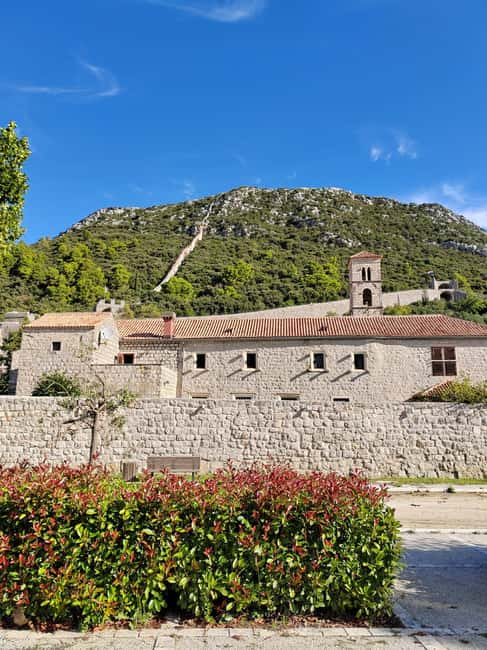
The final part of the walk takes you onto the 14th-century city walls, where you explore old medieval fortresses and look across Ston, the salt pans, the sea and the surrounding hills. This is the tour’s grand finish, and it combines the architectural scale of the fortifications with the setting that gave them purpose.
The walls are often the main draw for a visit to Ston. Here, you get more than a brief look from below: the walk takes you up onto them and through the old fortifications. The views are part of the reward, but the route also helps you appreciate the size of the defensive system. The walls are described as the second largest fortification in the world, a striking claim for a town of this scale.
The trade-off is the effort. Walking along historic walls means climbing, and this is not the right tour for every fitness level. If steep or uneven walking is difficult for you, consider skipping the climb and visiting Ston at your own pace instead. The activity is explicitly unsuitable for wheelchair users and people with mobility impairments.
If you do take the tour, keep the camera accessible but do not let the view distract you from your footing. Comfortable shoes matter more here than stylish ones. A hat and sunscreen are practical too, especially since the route includes exposed areas and a hot day can make the climbs feel tougher.
Is $66 per person good value?
At $66 per person, the tour bundles a local licensed guide with entry tickets to both the city walls and the saltworks. It also covers sightseeing in the medieval town and a two-hour route that connects Ston’s main historic features. You do not need to arrange separate guided visits for each stop.
The value depends on what you want from Ston. If you are interested in the town’s history, salt production and fortifications, the joined-up explanation is the main benefit. You can see the saltworks and walls in context, ask questions as you go, and avoid trying to piece together the relationship between them on your own.
If you only want a quick look at the town or plan to visit the walls independently, the guided tour may be more than you need. The price does not include items you purchase, and there is no transport component listed. The meeting point can vary according to the option booked, so check the details for your selected option before setting out.
The small number of published ratings is not enough to promise that every tour will be identical, but the comments consistently highlight Mia’s friendliness, detailed explanations and helpful answers. Those qualities are especially valuable in a two-hour visit, where a good guide can make the route feel cohesive rather than rushed from stop to stop.
Who will get the most from this walk?
This tour suits you if you want to understand why Ston is more than a scenic old town. It is particularly appealing if medieval fortifications interest you, if you want to see an active saltworks, or if you prefer a guide who can answer questions as you explore.
It can also work well for a group or family comfortable with walking and climbing. Mia has accommodated a family of six adults on a hot day, which suggests the tour can be attentive to a group’s pace. Still, the route is not described as a private or custom-paced experience in every instance, so do not count on special arrangements beyond what you confirm when booking.
It is a poor fit if you need step-free access, use a wheelchair, or have difficulty with uphill walking. There is no listed alternative route that avoids the climbs. If heat affects you, choose a cooler time if your booking option allows it, and come prepared with sun protection.
The tour is offered in English. Its two-hour length works well if you have limited time in Ston but still want more than a look at the walls. You will cover the old town, fortress, saltworks and city walls in one outing, though the pace and climbing mean it is not a casual, flat stroll.
Should you book the Ston walking tour?
Book it if you want the walls and saltworks explained together, and you are comfortable with a climb. The included admissions and local guide make the $66 price easier to justify, especially if hearing about Ston’s salt tradition and seeing the working saltworks matter as much to you as the views.
Skip it if you need an accessible route or mainly want an easy walk through town. For everyone else, bring good shoes, sun protection and questions for your guide. Ston’s best story is the connection between the salt below and the stone defences above, and this tour is built around exactly that.
FAQ
How long is the Ston walking tour?
The guided walking tour lasts two hours and covers the old town, city walls and saltworks.
What is included in the $66 price?
The price includes a local licensed guide, sightseeing in the medieval town, and entry tickets to the city walls and saltworks.
Is the tour offered in English?
Yes. English is the listed tour language.
Will I visit an active saltworks?
Yes. The saltworks are still working, and the visit covers natural salt production using methods associated with Roman times.
Can I feel the salt crystals?
Yes. The saltworks visit includes a chance to feel salt crystals on your fingers.
Is the tour suitable for wheelchair users?
No. It is listed as unsuitable for wheelchair users and people with mobility impairments.
What should I bring?
Bring comfortable shoes, a hat and sunscreen.
Where does the tour end?
The activity ends back at the meeting point. The meeting point may vary depending on the option booked.
More walking tours in Dubrovnik
- Dubrovnik: Old Town Walking Tour
★ 4.8 · 5,174 reviews - Dubrovnik Discovery Old Town Walking Tour
★ 5.0 · 4,458 reviews - Dubrovnik: Game of Thrones Walking Tour
★ 5.0 · 1,732 reviews - Dubrovnik Old Town History Walking Tour
★ 5.0 · 1,684 reviews
Recently added in Dubrovnik
- TOP OFFER: Dubrovnik to Split via Ston, Počitelj, Mostar, Kravica★ 5.0 · 15 reviews
- Private tours to Elaphite Islands by UFO BOAT★ 5.0 · 6 reviews
- Peljesac Wine & Ston Oysters PRIVATE HALF DAY SHORE TOUR★ 5.0 · 10 reviews
- Dubrovnik Old City Walls Private Tour★ 5.0 · 12 reviews
- Ston Tour: City Walls, Saltworks, Wine & Adriatic Seafood★ 5.0 · 3 reviews
- Pelješac Wine, Beach and Lunch – Relaxing Tour from Dubrovnik★ 5.0 · 15 reviews
- Private Full Day Peljesac Wine Tasting Tour from Dubrovnik★ 5.0 · 35 reviews
- Visit magical Mljet Island with private speedboat★ 5.0 · 7 reviews
Dubrovnik City Walls Tours, compared.

City Walls Early Morning or Sunset Walking Tour
Read our review →

Dubrovnik Combo: Old Town & Ancient City Walls
Read our review →

Dubrovnik Cable Car Ride, Old Town Walking Tour plus City Walls
Read our review →
City Walls Tour for Early Birds & Sunset Chaser
Read our review →
Dubrovnik City Walls Tour for Early Birds or Sunset Chasers
Read our review →Browse the lists this tour appears in