
Reviewed · DUBROVNIK HISTORY TOURS
Dubrovnik walking history tour
Dubrovnik’s Old Town is more than a handsome collection of stone lanes. On this 90-minute walk, a licensed guide connects its landmarks to the former Republic of Dubrovnik, including the 15th-century fountain fed by a 12-kilometer aqueduct. It’s a useful way to give the city’s grand façades some context before you set off on your own.
I like two things in particular: the tour makes time for Onofrio’s Fountain and its remarkable water system, and the guides bring local history to life with stories and practical recommendations. Ines is a guide name associated with the tour, and her approach has been described as friendly, well paced, and wide-ranging, including connections to Croatia and Yugoslavia.
The main consideration is that the tour price does not cover City Walls tickets, which cost €35 per person. You’ll also be in a group of up to 30, so this is a shared walk rather than a private history lesson.
What to know before you book
- Onofrio’s Fountain marks a feat of public engineering: It was built in the 15th century at the end of a 12-kilometer aqueduct that supplied Dubrovnik with water.
- The walk covers landmark-heavy ground: Expect the Franciscan Monastery, Orlando’s Column, the Rector’s Palace, Sponza Palace, and the Cathedral of the Assumption.
- City Walls entry costs extra: The listed ticket price is €35 per person, and it is not part of this tour.
- A licensed guide is included: The tour is offered in English, with Ines among the guide names associated with it.
- Plan for a small slice of a big city story: The walk lasts about 90 minutes, begins at Pile Gate, and ends back at the meeting point.
- It can be a popular booking: The experience is booked an average of 48 days ahead, though that is not a guarantee of availability on any particular date.
A short walk through Dubrovnik’s long story
This tour is built around a simple idea: walk through the Old Town while someone explains why its monuments matter. That makes it especially useful early in a stay. You get names, dates, and connections to carry with you when you return to the same streets later without a guide.
The focus is the Republic of Dubrovnik and its monuments. The route also takes in places that help explain daily life, civic identity, and the city’s changing past. You are not just moving from one photogenic façade to the next. The guide’s job is to show how the buildings and public spaces fit into a larger story.
That human element is a major part of the tour’s value. Ines is the guide name most clearly associated with it; accounts of her guiding style emphasize accessible explanations, local knowledge, and helpful recommendations. One account also gives the name as Ynez, so spellings may vary. Guides can change, but the tour promises a licensed guide rather than a self-guided route.
More history tours in Dubrovnik:
- Dubrovnik Old Town History Walking Tour
★ 5.0 · 1,684 reviews - Game of Thrones & History of Dubrovnik Tour
★ 5.0 · 628 reviews - Dubrovnik: Old Town History Walking Tour
★ 4.9 · 474 reviews
Starting at Pile Gate and finding your bearings
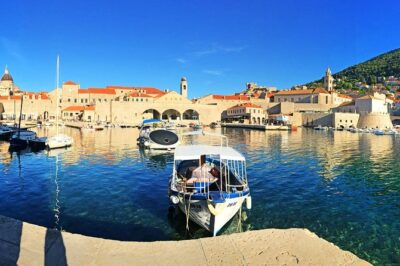
The meeting point is listed as Art Go’den, Brsalje ul. 1, near Pile Gate. The walk starts and ends at the same point, which keeps the outing straightforward: you do not need to plan a separate return journey after the tour.
Pile Gate is a practical place to begin because it puts you at the threshold of the Old Town. From there, you’ll walk into the historic center and follow a route through its major sights. The exact pace and order can depend on the guide and conditions, but the tour description names the Franciscan Monastery, Orlando’s Column, Onofrio’s Fountain, the Rector’s Palace, Sponza Palace, and the Cathedral of the Assumption.
Ninety minutes is enough to establish a framework, not to exhaust Dubrovnik’s past. That is a strength if you want orientation without giving up half a day. It is also a limit: you should not expect long indoor visits or a detailed look at every landmark unless the guide specifically includes one. The listed experience is a guided walking tour, and no attraction entry tickets are included in the price.
Sponza Palace and the city’s public face
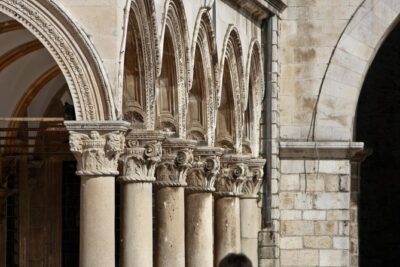
Sponza Palace is the named itinerary stop, and the wider route also includes the Rector’s Palace. Together, these buildings give the guide a natural opening to talk about Dubrovnik’s civic and political life. Their place among the Old Town’s major monuments helps make the city’s former republic feel less abstract.
The tour description does not promise interior admission to either palace. Treat them as landmarks on a guided walk, not as included museum visits. That distinction matters if you are budgeting time or hoping to explore exhibitions inside. You can still appreciate the buildings from the route and hear why they matter, then decide whether you want to return independently.
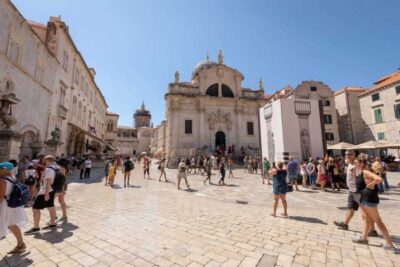
Sponza’s prominence also makes it a good place to slow down and look closely. A guide can help you notice the relationship between a building and the city around it, rather than simply snapping a photo and moving on. The tour’s strength is this kind of interpretation: a compact explanation tied to a real place.
Onofrio’s Fountain and a 12-kilometer aqueduct
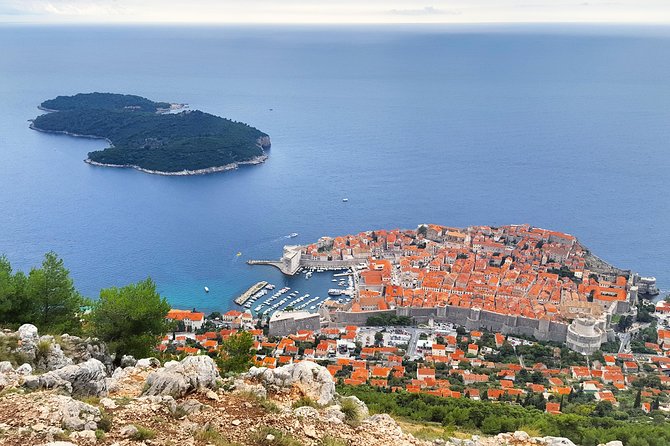
Onofrio’s Fountain is one of the most memorable stops because the story behind it is practical as well as historic. Built in the 15th century, it stood at the end of a 12-kilometer aqueduct that brought water to the city. That is a striking piece of infrastructure to encounter in the middle of an Old Town walk.
The fountain offers a useful change of pace from palaces and monuments. You can pause, take in the structure, and, as described for the tour, refresh yourself with water there. Its story points to a basic question that grand historic streets can obscure: how did people living here get the necessities of daily life?
This is one of the tour’s most distinctive details, and it helps explain why a guide-led walk can add more than a list of dates. You may already recognize the fountain in photographs. Knowing that it marked the end of a long water route gives the place a second layer of meaning.
More walking tours in Dubrovnik:
- Dubrovnik: Old Town Walking Tour
★ 4.8 · 5,174 reviews - Dubrovnik Discovery Old Town Walking Tour
★ 5.0 · 4,458 reviews - Dubrovnik: Game of Thrones Walking Tour
★ 5.0 · 1,732 reviews - Dubrovnik: City Walls Early Morning or Sunset Walking Tour
★ 4.8 · 1,523 reviews
Orlando’s Column, the monastery, and the cathedral

Orlando’s Column is presented as a monument to Dubrovnik’s freedom. Its position on the route gives the guide a chance to discuss civic identity in a way that is visible in the streetscape, not tucked away in a history book. The column is a brief stop, but the idea behind it gives the tour one of its clearest links between a monument and the city’s political memory.
The walk also passes the Franciscan Monastery. The tour information does not specify an interior visit, so expect to see it as part of the Old Town route rather than count on time inside. That is worth remembering if you have a particular interest in the monastery and want to explore it at length.
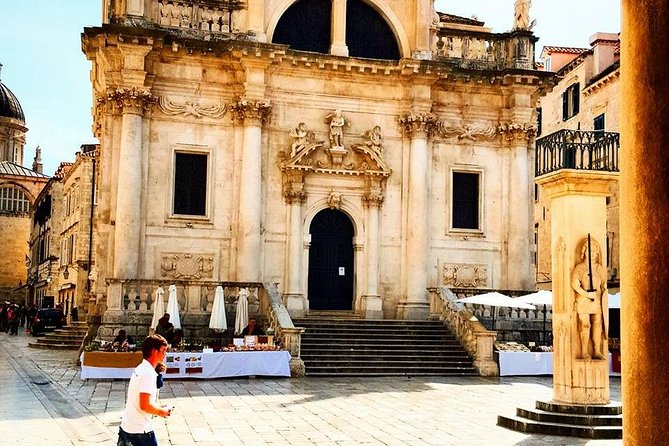
The Cathedral of the Assumption rounds out the route with a different chapter. It is a Baroque church built after the devastating earthquake of 1667. That detail gives the cathedral a clear historical context: it belongs to the city’s rebuilding after a major disaster. The guide can help connect that event to the broader story of Dubrovnik, while you take in the exterior and its place among the surrounding streets.
What the guide adds, and what the group size means
The strongest praise attached to this tour centers on the guide’s ability to make history understandable and enjoyable. Ines is described as friendly and easygoing, with an effective balance of historical explanation, local context, and recommendations. The guiding style is also praised for its clear English and steady pace.
Some guide accounts connect Dubrovnik’s story to Croatia and former Yugoslavia, which can help you understand the city beyond its medieval and Baroque landmarks. That wider frame is valuable if you want more than architectural labels. Still, the tour’s central focus is Dubrovnik’s history and monuments, so do not assume it will function as a detailed modern political history lecture.
The maximum group size is 30. That is manageable for a public walking tour, but it is not an intimate private group. If you prefer to ask many questions or move at your own pace, a larger group may feel less personal. The reported emphasis on thoughtful pacing is a plus, but you should still expect to share the guide’s attention with other people.
One cancellation account describes a guide becoming ill from extreme heat on the way to the meeting point, with the booking refunded in full. That is an unusual but useful reminder to keep some flexibility in a hot-weather destination. It also shows why a guide may have to put health and safety ahead of the schedule. The tour carries a 4.8 out of 5 rating, with 95% of people recommending it, but no tour can guarantee that every departure will go exactly to plan.
Is $33.61 good value?
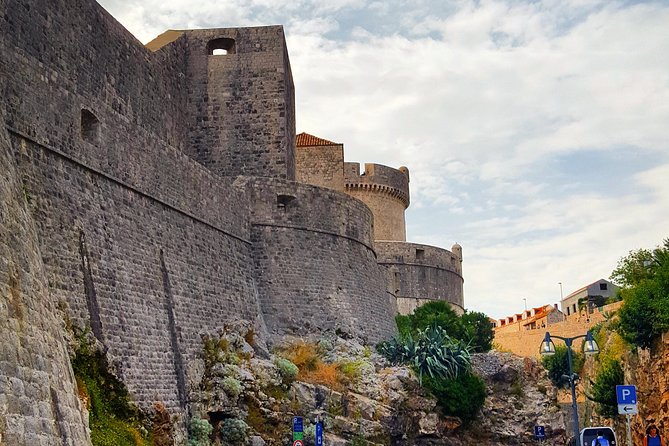
At $33.61 per person, the price buys a licensed English-speaking guide and about an hour and a half of context across several central landmarks. If you are new to Dubrovnik, that can be a worthwhile first investment. A guide can make it easier to understand what you are looking at and help you decide which places deserve a longer return visit.
The price is less compelling if you want to enter several monuments or spend most of your day inside museums. Those admissions are not stated as included, and City Walls tickets alone cost €35 per person. The Walls are a separate expense, so budget for them independently if walking the fortifications is part of your plan.
The tour is best seen as an introduction, not an all-in-one ticket. You pay for the walk and the guide’s interpretation, not access to the City Walls or other facilities. If you value a clear overview and local stories, that distinction is fair. If your priority is simply to see the Old Town at your own pace, you may prefer to explore independently and spend the money on a specific admission instead.
The experience is booked an average of 48 days ahead. That suggests planning in advance can help, especially if your dates are fixed, but it does not mean you must book that early. Confirmation is provided at booking, and free cancellation is available up to 24 hours before the start time. After that point, the amount paid is not refunded, and changes are not accepted.
Who will get the most from this walk?
I would choose this tour if you want a concise introduction to Dubrovnik before exploring on your own. It suits first-time visitors, history-minded walkers, and anyone who likes having a local guide connect landmarks to the city’s past. The 90-minute length is also helpful if you want structure without committing a large part of your day.
It may be a weaker fit if you want an unhurried visit inside each monument, a private guide, or City Walls access bundled into one price. You will need to buy the Walls ticket separately, and the group can include up to 30 people. The tour is described as suitable for most people, with service animals allowed, but no further accessibility details are provided.
For the best experience, come ready to listen and ask questions, and leave time to revisit any site that catches your interest. This walk gives you a useful map of the city’s history. It does not replace a full day of independent exploring, and that is not a flaw. Think of it as the first chapter, then let the rest of Dubrovnik unfold at your own pace.
Should you book it?
Book this tour if you want a guided orientation to the Old Town, especially for the aqueduct story, the civic monuments, and the context a licensed guide can add. Ines is a name associated with warm, engaging guiding, though you should not assume a particular guide will lead your date.
Skip it if your main goal is access to the City Walls or long visits inside individual sites, since those are not included. At $33.61, the walk offers reasonable value for a focused introduction, provided you understand that the €35 Walls ticket is extra. For a first look at Dubrovnik’s central landmarks, it is a practical way to begin.
FAQ
How long is the Dubrovnik walking history tour?
It lasts about 1 hour and 30 minutes.
Where does the tour begin and end?
It begins at Art Go’den, Brsalje ul. 1, near Pile Gate, and ends back at the meeting point.
What language is the tour offered in?
The tour is offered in English.
Are City Walls tickets included?
No. City Walls tickets are not included and cost €35 per person.
What is included in the price?
A licensed tour guide is included. Tickets for the City Walls and other facilities are not included.
How many people can join the tour?
The maximum group size is 30 people.
Can I cancel for a refund?
Yes, you can cancel at least 24 hours before the start time for a full refund. Cancellations made less than 24 hours before the start time are not refunded.
Recently added in Dubrovnik
- TOP OFFER: Dubrovnik to Split via Ston, Počitelj, Mostar, Kravica★ 5.0 · 15 reviews
- Private tours to Elaphite Islands by UFO BOAT★ 5.0 · 6 reviews
- Peljesac Wine & Ston Oysters PRIVATE HALF DAY SHORE TOUR★ 5.0 · 10 reviews
- Dubrovnik Old City Walls Private Tour★ 5.0 · 12 reviews
- Ston Tour: City Walls, Saltworks, Wine & Adriatic Seafood★ 5.0 · 3 reviews
- Pelješac Wine, Beach and Lunch – Relaxing Tour from Dubrovnik★ 5.0 · 15 reviews
- Private Full Day Peljesac Wine Tasting Tour from Dubrovnik★ 5.0 · 35 reviews
- Visit magical Mljet Island with private speedboat★ 5.0 · 7 reviews
Dubrovnik History Tours, compared.



Dubrovnik History, Sweets & Liquors in a Private Palace (PRIVATE)
Read our review →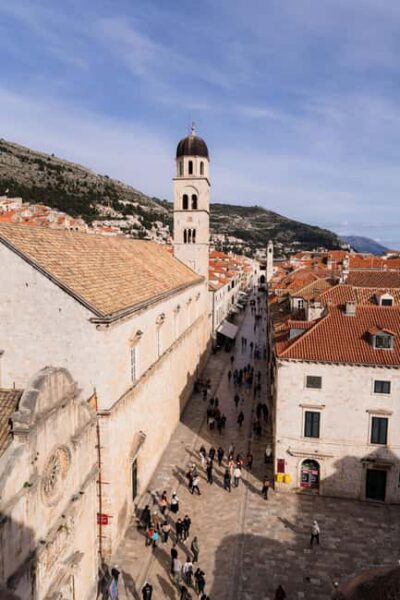
Dubrovnik Old Town: Night tour with History, Wine & Bites
Read our review →
Browse the lists this tour appears in